A shop can serve the same neighbourhood for decades and still depend heavily on the person sitting behind its counter. Customers may know the owner, trust their recommendations and return out of habit. But what happens when that owner steps away?
That question gets to the heart of brand building. A business can earn a living through daily transactions, but a recognisable brand gives customers something beyond a location or a familiar face: an identity they can remember, ask for and associate with a particular product or experience.
In this article, we explore the story of Seth Jhulan Lal and the lessons it offers small business owners who want to build something that can grow beyond them.
The problem with running a business without a distinct identity
Imagine a trader who has sold tea, snacks, spices or cooking oil in the same market for 15 or 20 years. The shop has regular customers and generates income. Neighbours know the owner by name and recommend the shop to others.
That reputation has real value. The question is whether it belongs only to the person, or whether it has also been built into an identity that customers can recognise independently.
Customers may visit because the shop is nearby, because the owner knows their preferences, or because they trust the service they have received over time. These are useful advantages, but they can be difficult to reproduce when the business expands, changes hands or opens another location.
A clear brand identity helps turn personal goodwill into something more consistent: a name, a promise and an experience customers can learn to recognise.
The story of Seth Jhulan Lal: what happens across generations?
Consider the example of Seth Jhulan Lal, a familiar trader whose customers have relied on him for years. People know where to buy their tea leaves or oil, and they associate the shop with his personal reputation.
As long as he is present, that relationship may continue to bring customers through the door. But if the next generation takes over, will customers automatically feel the same connection?
They might—but that trust should not be taken for granted. The new owner may need to rebuild relationships, explain the product offering and establish their own credibility.
The lesson is not that family businesses cannot survive a handover. Many do. It is that a business becomes more transferable when its reputation is supported by a distinct identity, reliable products, consistent service and systems that do not depend entirely on one individual.
What a strong brand name can do for a business
1. Help customers recognise and remember you
A distinctive, memorable name gives customers a simple way to identify your products. Instead of asking for a generic item or describing a shop by its location, they can ask for your brand by name.
Recognition takes time to build. The name needs to be supported by a consistent product experience, clear communication and dependable service. A name alone does not guarantee repeat sales, but it gives customers something specific to remember.
2. Make expansion easier to organise
When a business grows from one shop to multiple outlets, distributors or retail partners, a shared brand identity helps connect those touchpoints. Customers can recognise the same business across different locations.
Expansion still requires sound operations, product quality, pricing and customer service. Branding supports those efforts; it does not replace them.
3. Build on the work you have already done
Every satisfied customer, product improvement and successful interaction can contribute to a brand's reputation. Over time, those experiences may help the business earn referrals and repeat purchases.
This is how brand-building differs from starting every day with no accumulated recognition. The work you do today can support tomorrow's customer relationships, provided the business continues to deliver on its promises.
A brand name is only the beginning
Choosing a name is an important step, but a name becomes a brand through the experience surrounding it. Product quality, packaging, service, communication and consistency all shape what customers think when they encounter your business.
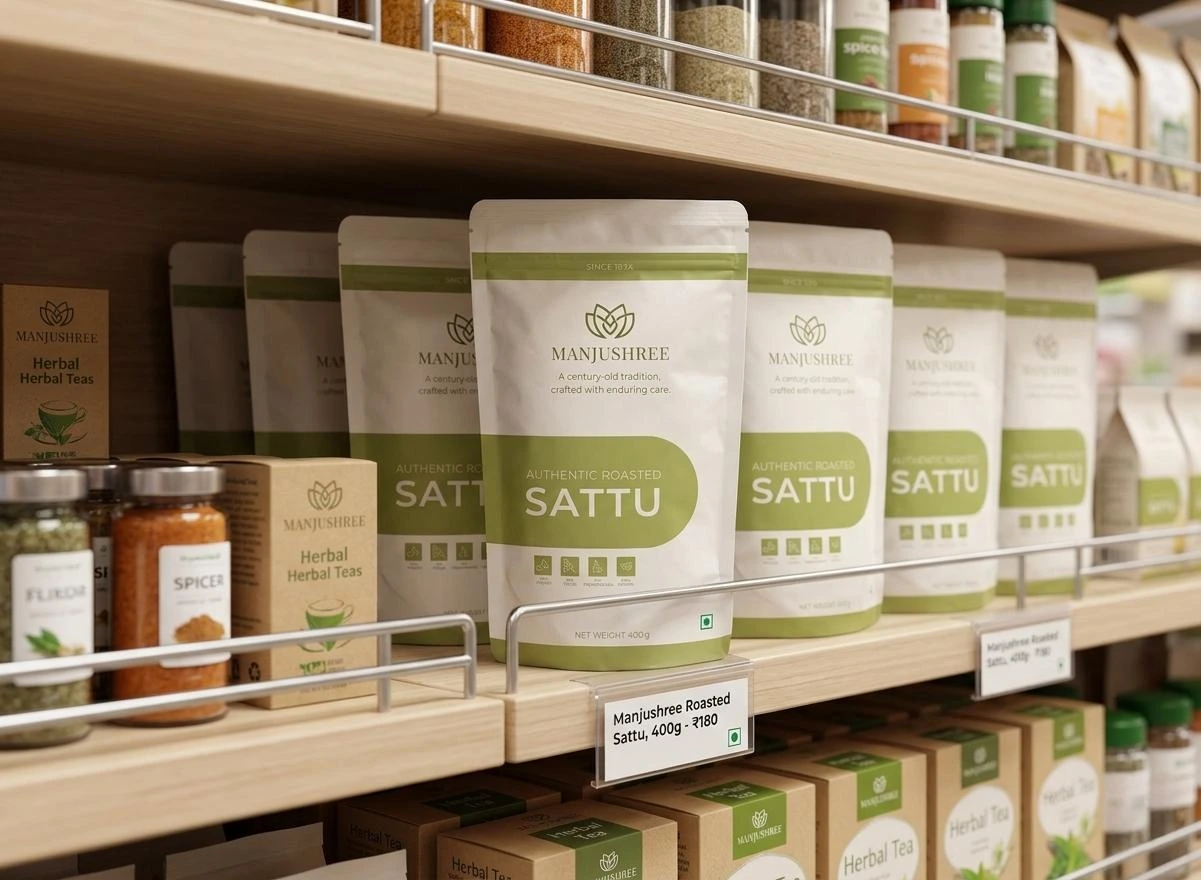
For an FMCG product, that experience may begin on a retail shelf. The customer sees the name, reads the pack, notices the design and decides whether the product feels relevant and trustworthy.
Build a consistent identity
- Choose a name that is distinctive, appropriate for your business and practical to use.
- Develop a clear logo, typography and colour system that works across packaging and marketing.
- Make product names and variants easy to distinguish.
- Keep important information readable and ensure packaging claims are accurate.
- Maintain consistency across your website, retail materials, social channels and product packs.
Consistency does not mean every product must look identical. It means customers can recognise the common identity while still understanding what makes each product different.
Why trademark protection deserves early attention
Business owners sometimes invest in packaging, marketing and customer acquisition before checking whether their chosen name is available for use and registration. That can create avoidable risk if a similar or conflicting mark already exists.
A trademark can help protect a brand identifier for the goods or services covered by the registration. The scope of protection depends on factors such as the mark, relevant classes, existing rights and applicable law.
Before committing to a name, search for potentially conflicting marks and consider getting advice from a qualified trademark professional. Registration is not automatic, and simply using a name does not guarantee that it can be registered or used without conflict.
Practical steps before you invest in a brand
- Shortlist names that are distinctive and suitable for your product category.
- Search the relevant trademark records and look for similar names in related categories.
- Check practical availability, including relevant domains and social handles.
- Seek professional advice if a potentially conflicting mark appears or the position is unclear.
- Once you have made an informed decision, develop your identity and packaging around the chosen name.
These steps are general business guidance, not a substitute for legal advice on a specific trademark.
Think beyond the shopfront
A small business does not need to become a national corporation to benefit from branding. Even a local manufacturer, neighbourhood retailer or emerging food business can benefit from a name and identity that customers can remember.
Start with the business you have today. Understand who buys from you, what they value and why they choose your product. Then build a recognisable identity around those strengths and make sure the actual customer experience supports it.
For businesses entering FMCG, this also means considering how the name will work on packaging, labels, product listings and future variants. A brand system should be practical enough to grow with the business rather than needing to be reinvented at every stage.
Common brand-building mistakes to avoid
- Choosing a name too quickly: a name that sounds good today may be difficult to distinguish or protect.
- Copying competitors: similar names and visuals can confuse customers and create legal risks.
- Changing the identity constantly: frequent unnecessary changes can make recognition harder to build.
- Investing only in the logo: branding also includes the product experience, packaging, communication and service.
- Making promises the business cannot support: trust depends on delivering what the brand communicates.
Final thoughts: build a business that can outlast its founder
The story of Seth Jhulan Lal illustrates an important distinction: personal goodwill can be a strong foundation, but a business should not rely on the owner's presence alone.
A memorable brand name, consistent product quality, recognisable packaging and reliable systems can help a business carry its reputation forward. They do not guarantee success, but they give the business a stronger foundation for growth and continuity.
Instead of asking only how much the shop earned today, ask what your business is building for tomorrow: customer recognition, a trusted product, a distinctive identity or a system that others can carry forward.
Ready to build your brand?
PackagingWala helps entrepreneurs think through branding, packaging and the practical decisions involved in bringing an FMCG product to market.
Explore business and branding consultancy or view our work to learn more about our approach.
Frequently asked questions
Why is a brand name important for a small business?
A brand name helps customers identify and remember a business. When supported by consistent quality and service, it can contribute to recognition, repeat purchases and clearer differentiation.
Can a business grow without a brand name?
A business can operate without a developed brand identity, especially through local relationships or referrals. However, a distinctive identity can make it easier to communicate what the business offers and build recognition as it grows.
Is a logo the same as a brand?
No. A logo is one visual element of a brand. A brand also includes its name, reputation, customer experience, communication, product quality and the associations people form with the business.
Should I register a trademark before printing packaging?
It is sensible to check name availability and assess trademark risks before investing heavily in packaging or promotion. Consider qualified professional advice because registration and use depend on the specific facts and applicable law.
What makes a brand easier to recognise?
A distinctive name, consistent visual identity, clear product information and a dependable customer experience all help build recognition over time.