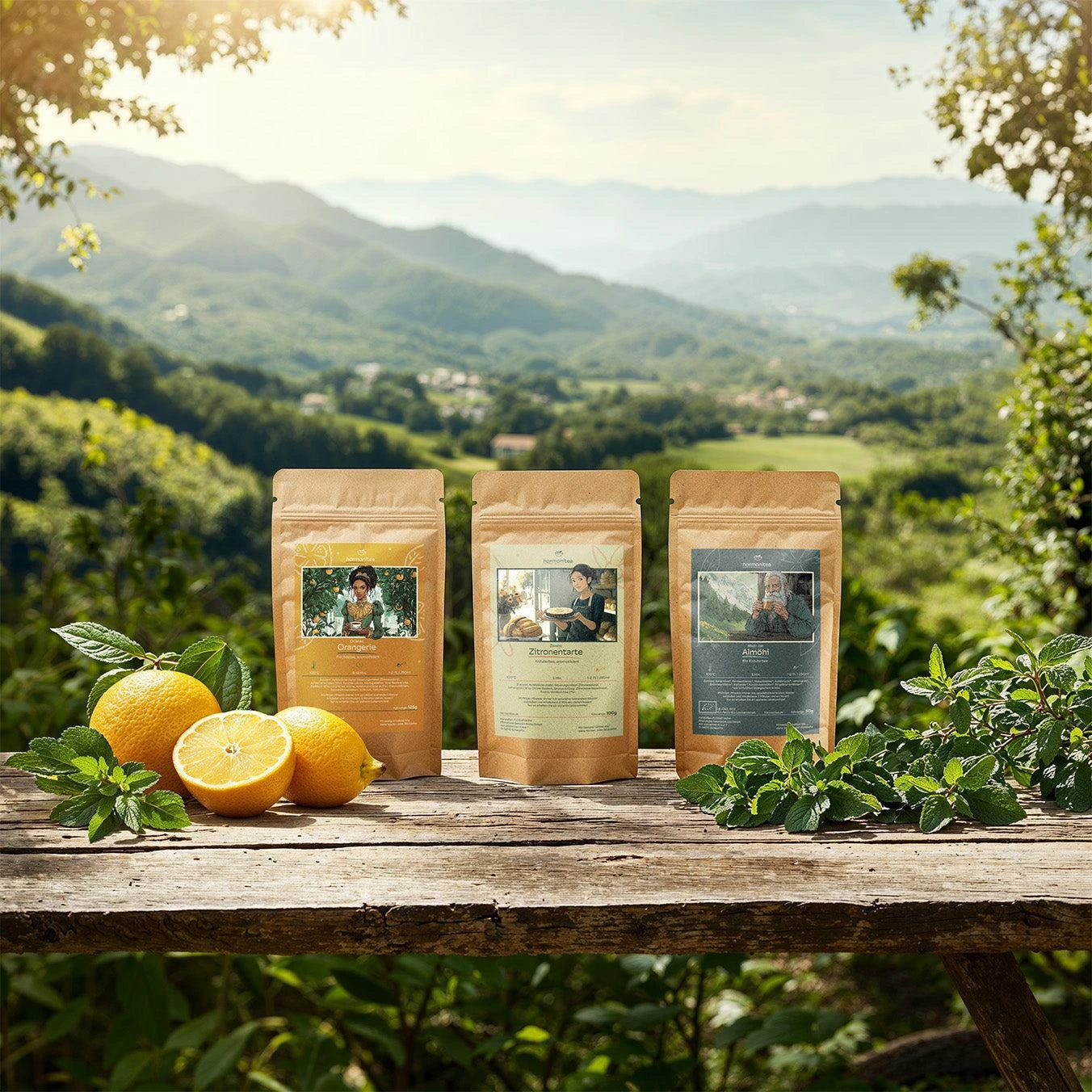
Some brands begin with a market gap. Others begin with a personal memory. For Devarul Organics, the starting point was a simple ritual: sharing tea with a father.
In a conversation with PackagingWala, Arvind Singh Parihar, Founder and CEO of Devarul Organics, shared how his long-standing interest in tea grew into a wider ambition to build a food brand centred on quality, research and transparency.
The story offers a useful look at more than tea. It also raises an important question for every FMCG founder: how do you grow a product business without losing sight of what made you start?
A personal connection that became a business idea
Arvind recalls spending mornings with his father, who served as a Deputy Director in the Veterinary Department. Sitting together in the garden over a cup of tea became a lasting childhood memory. After his father passed away while Arvind was still young, that connection with tea remained.
Years later, after building a career in the pharmaceutical industry, he began exploring tea more seriously. He pursued professional tea studies and learnt about cultivation, processing and quality parameters. A personal interest gradually became a focused business ambition, leading to Devarul Organics.
For founders, this is a reminder that a brand story works best when it is rooted in something real. The story should explain why the business exists—not simply make the product sound attractive.
Building an FMCG brand around quality
In the interview, Arvind described a principle that guides his approach to the business: improve efficiency without compromising the product.
Reduce costs through efficiency, not by reducing product quality.
That principle informs the company's interest in vertical integration and in-house manufacturing. The intended benefits include greater control over production, more consistent standards and better visibility into how products are made. The company has also discussed plans to manufacture bottles in-house for a future edible-oil range.
For an emerging FMCG brand, quality is not only a sourcing decision. It influences production processes, packaging choices, customer expectations and the ability to deliver a consistent product over time.
What does Devarul Organics offer?
The product portfolio described in the original interview spans several food categories:
- Tea: premium CTC tea, orthodox tea, green tea, limited-edition green tea and black leaf tea.
- Spices: turmeric, red chilli powder, coriander powder, chaat masala and specialty blends.
- Natural products: jaggery cubes, millet-based products and organic food ingredients.
- Planned categories: cold-pressed oils, wooden ghani oils and traditional cooking oils.
As a brand expands across categories, each product needs a clear identity while still feeling part of the same business. Consistent design elements can help customers recognise the brand, while product-specific information makes it easier to distinguish varieties on a shelf.
Why tea packaging should communicate the product honestly
Packaging is often the first point of contact between a food brand and a customer. Before someone tastes the tea, they judge the product through its name, visual design, information and overall presentation.
Devarul's tea packaging philosophy, as discussed in the interview, puts emphasis on the tea leaves rather than relying only on a stylised cup of tea or exaggerated colour cues. The idea is to make the product's source and character central to the visual story.
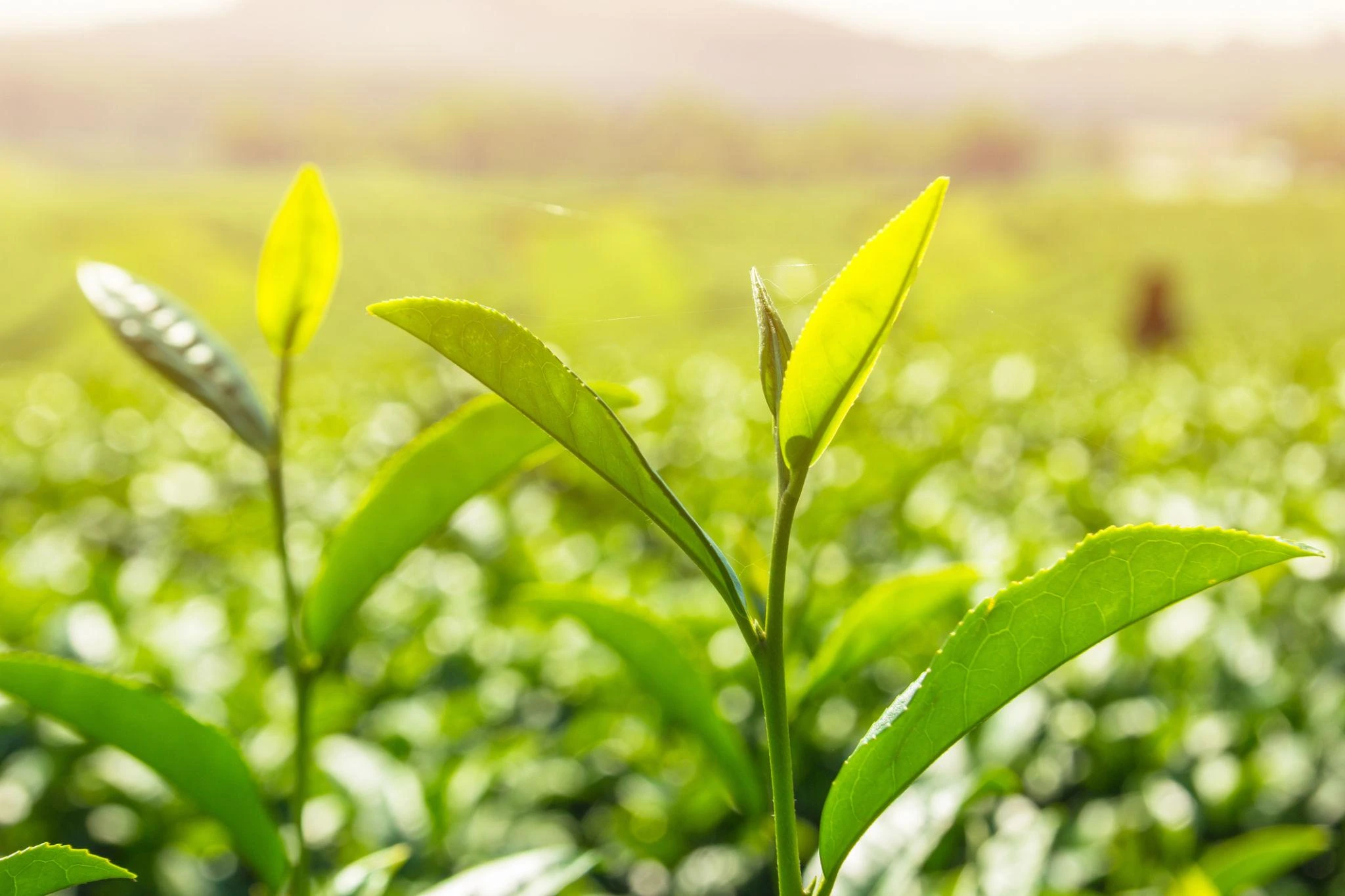
The familiar phrase “two leaves and a bud” captures this connection to the tea plant. When a brand uses botanical imagery, product photography or illustrations, those elements should support the product's real identity instead of creating expectations the product cannot meet.
What FMCG founders can learn from this
- Make the product category and variant easy to identify.
- Use imagery that fits the actual product and brand positioning.
- Keep key information readable at real package size.
- Build a consistent visual system across flavours, grades and pack sizes.
- Choose packaging materials and formats according to product protection, distribution and shelf requirements.
A premium appearance matters, but it works best when design, product quality and customer experience support one another.
CTC tea explained: crushing, tearing and curling
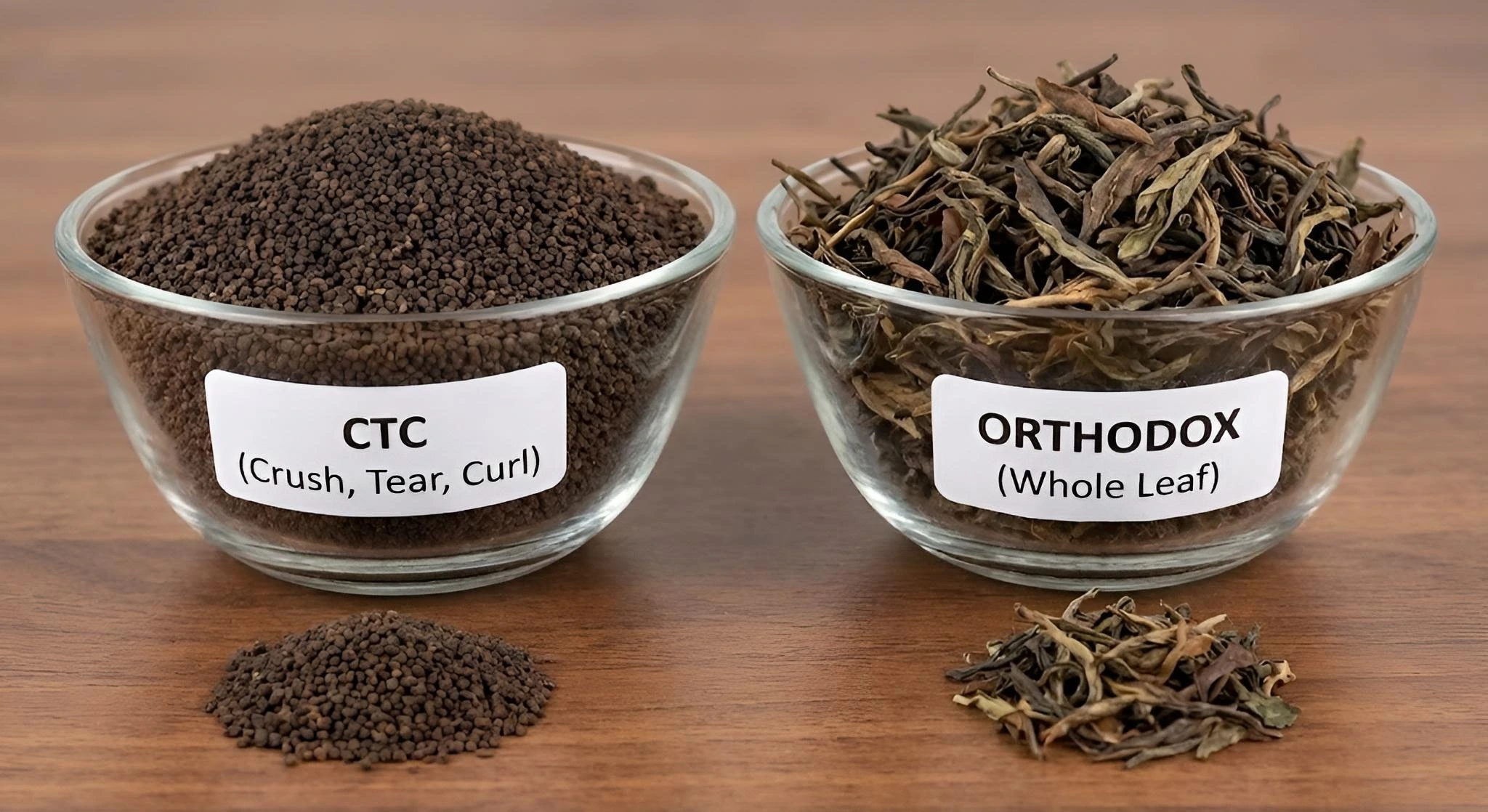
CTC stands for Crush, Tear, Curl. It describes a processing method in which tea leaves are passed through machinery that crushes, tears and curls them into small particles.
CTC tea is commonly used for strong, brisk cups of tea, including milk tea and masala chai. Its character depends on the tea material, processing and brewing method—not on the acronym alone.
What is orthodox tea?
Orthodox tea is made using more traditional processing methods that generally preserve more of the leaf's shape. Depending on the tea and its origin, it can offer a different aroma, appearance and range of tasting notes from CTC tea.
Neither method is automatically better for every drinker. CTC may suit someone who enjoys a strong everyday chai, while an orthodox tea may appeal to someone who wants to explore the leaf's aroma and more nuanced flavours. The right choice depends on preference, preparation and the particular tea.
Green tea vs black tea: one plant, different processing
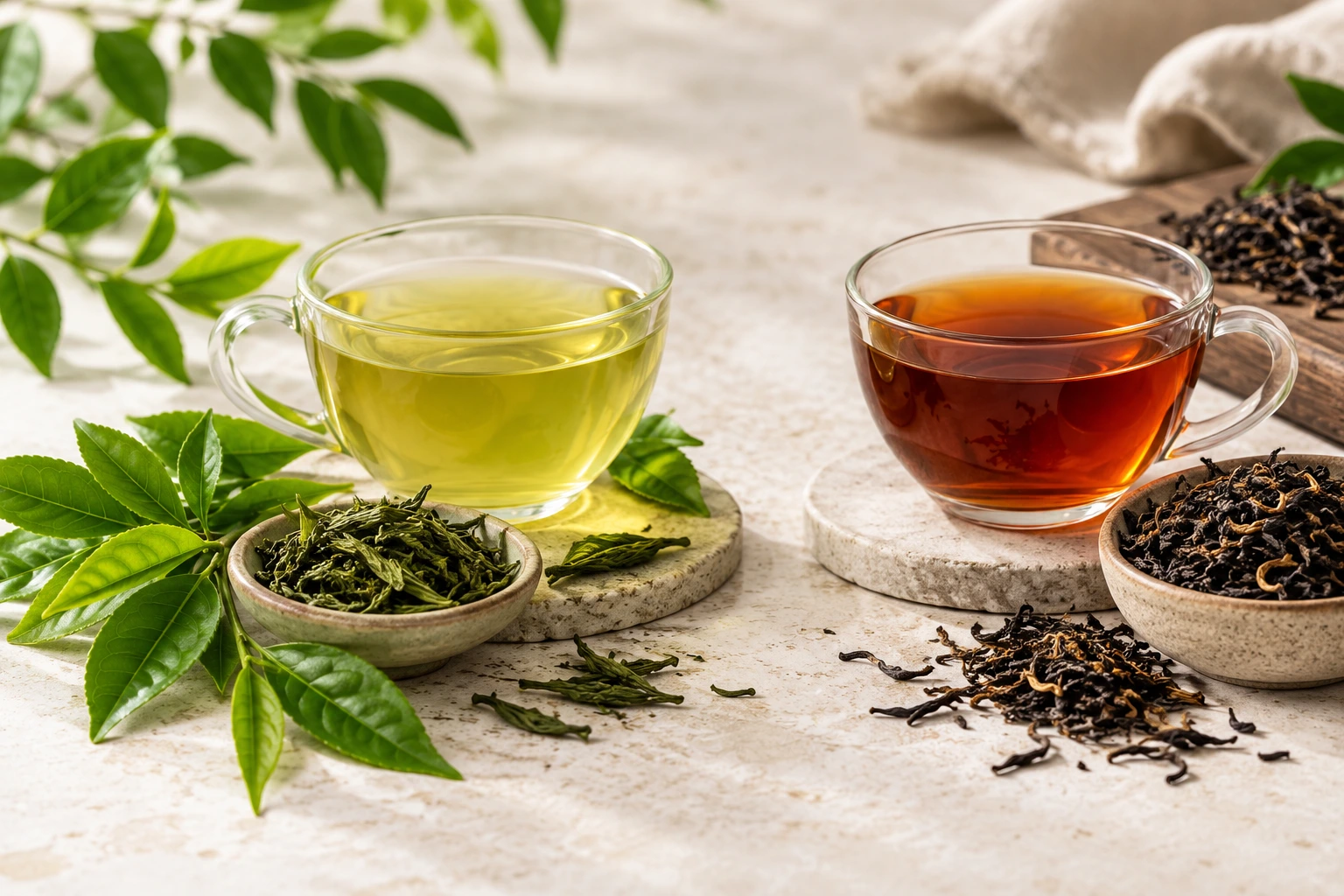
Green tea and black tea generally come from the same plant, Camellia sinensis. One major difference is how the leaves are processed after harvesting, particularly the extent of oxidation.
Green tea
Green tea is processed to limit oxidation. Depending on the style, the leaves may be heated soon after picking to help preserve their green colour and characteristic flavour. The result can range from fresh and grassy to sweet, nutty or vegetal.
Black tea
Black tea is allowed to oxidise more extensively before drying. This changes the colour of the leaves and develops the deeper, fuller flavours many drinkers associate with black tea.
Caffeine content and taste vary by tea type, leaf grade, serving size and brewing method. It is better not to assume that every green tea has less caffeine than every black tea.
Why limited-season tea attracts enthusiasts
During the conversation, Arvind discussed Devarul's limited-edition green tea and described a short availability window of roughly 18–20 days for the product. He linked this to specific seasonal flushes, when tender leaves are harvested during a limited period.
A flush refers to a growth and harvesting period in tea production. Different flushes can produce distinct characteristics depending on location, weather, cultivar and processing. A short harvest window can make a particular tea seasonal, but the quality and flavour still depend on the specific leaves and how they are handled.
For brands selling seasonal products, packaging and communication should make the reason for the limited run clear. Explain what is seasonal about the product and avoid using scarcity as a substitute for useful product information.
Is expensive tea always better?
Not necessarily. Price alone does not tell the full story. Leaf quality, origin, processing, freshness, storage and personal taste all influence the drinking experience.
Arvind's view in the interview was practical: people who enjoy tea every day may choose to spend more on a tea they genuinely prefer, provided it fits their budget. The important point is to understand what you are paying for rather than assuming that the most expensive option is always the best.
Testing, transparency and consumer trust
Devarul Organics described laboratory testing as part of its approach to product quality. The interview also referred to testing for its Rajapuri GI-tagged turmeric, with results shared publicly.
Testing claims should always be supported by current, product-specific documentation. For food brands, clear records and accurate communication are more useful than broad claims that a product is “pure” or “the best.” Where test reports are available, brands should ensure that the product, batch, laboratory and scope of testing are clearly identified.
What could come next for Devarul Organics?
The plans discussed in the interview included expanding the spice range, exploring premium and wooden-ghani oils, developing value-added natural products and pursuing B2B opportunities alongside retail. These are stated plans, not a guarantee that every category is already available.
Expanding a product portfolio brings new decisions about packaging formats, material performance, product information and supply-chain needs. Each category should be evaluated on its own requirements while preserving the brand's broader identity.
What this story teaches new FMCG founders
- Start with a clear reason: a meaningful founder story can give the brand a foundation, but the product must deliver on its promise.
- Learn your category: understanding raw materials and processing helps you explain your product accurately.
- Build systems for consistency: repeatable quality standards matter as a business grows.
- Make packaging informative: design should help customers understand the product, not distract them from it.
- Support claims with evidence: testing and transparency should be documented and communicated precisely.
Final thoughts
Devarul Organics' story, as shared by Arvind Singh Parihar, began with a personal connection to tea and developed into a broader ambition around food quality, research and consumer trust.
For entrepreneurs building an FMCG brand, the takeaway is straightforward: a compelling story can invite people to look closer, but product quality, honest communication and thoughtful execution are what give that story substance.
Building your own FMCG brand?
Packaging is one part of a much bigger launch decision. The right structure, design, product information and format should work together with your product and target customer.
Building Your Own FMCG Brand?
From packaging design to product presentation, every detail shapes how customers experience your brand. PackagingWala helps businesses explore packaging and branding solutions suited to their products.
or learn about FMCG business consultancy with PackagingWala.Frequently asked questions
Who founded Devarul Organics?
The original PackagingWala interview identifies Arvind Singh Parihar as the founder and CEO of Devarul Organics.
What does CTC mean in tea?
CTC means Crush, Tear, Curl, a tea-processing method commonly used to produce small tea particles suited to strong brews.
Are green tea and black tea made from different plants?
Generally, both are made from Camellia sinensis. Their differences come largely from processing, including how much the leaves oxidise.
What should a tea brand consider when designing packaging?
A tea brand should consider product protection, aroma retention, material choice, pack format, legibility, variant identification, distribution conditions and a visual identity that reflects the product honestly.